

Threat modelling at scale, without the overhead
Built for organisations already running threat modelling who need to do it continuously, across multiple teams and systems — without the admin burden that comes with managing it all manually.

Built through years of iteration and experience
Originally conceived in 2019 for internal use, our platform crystallises threat modelling challenges encountered by real customers. The reports it generates, the risk data it structures, the integrations it supports: all of it was shaped by what organisations actually need when they start doing this seriously.
The platform is available to customers that have worked with us previously and are looking for greater reporting flexibility, real-time security risk metrics or working to integrate security into their own technology teams without engaging our services team heavily.
At a glance
Ask any security risk question
Connect the integrated MCP server to Copilot, Claude, Gemini or any other compatible model and bring powerful new security insights into your AI workflows and decision-making.
Managing models at scale
Run multiple threat models across multiple systems and teams, all in one place. Your CISO gets a consolidated view of risk across the business. Your security team stops maintaining endless spreadsheets and document management system pages that are always out of date.
Outputs without the admin
Reports, risk registers, and control summaries generate automatically from the model. Download them, share them, or feed them into other systems. No more manually formatting outputs in Word or assembling board packs from five different sources.
Integration into your existing processes
Open GitHub issues for new risks. Notify teams on Slack when controls are completed. Trigger updates when code changes are deployed. Webhooks are supported out of the box, and a comprehensive API covers more complex use cases — including custom authentication, SSO, and bespoke tooling integrations.
How it works
The process is based on a lean, proven methodology our team has used in the field with hundreds of customers. It is quick to execute, captures the risks that matter, and delivers clear results.
Scope definition
The system is entered in diagrammatic form. Import diagrams from Lucidchart or draw.io, or use the embedded diagramming capability. Scope any architecture — cloud, on-prem, hybrid, SaaS, AI systems, supply chain, trust boundaries.
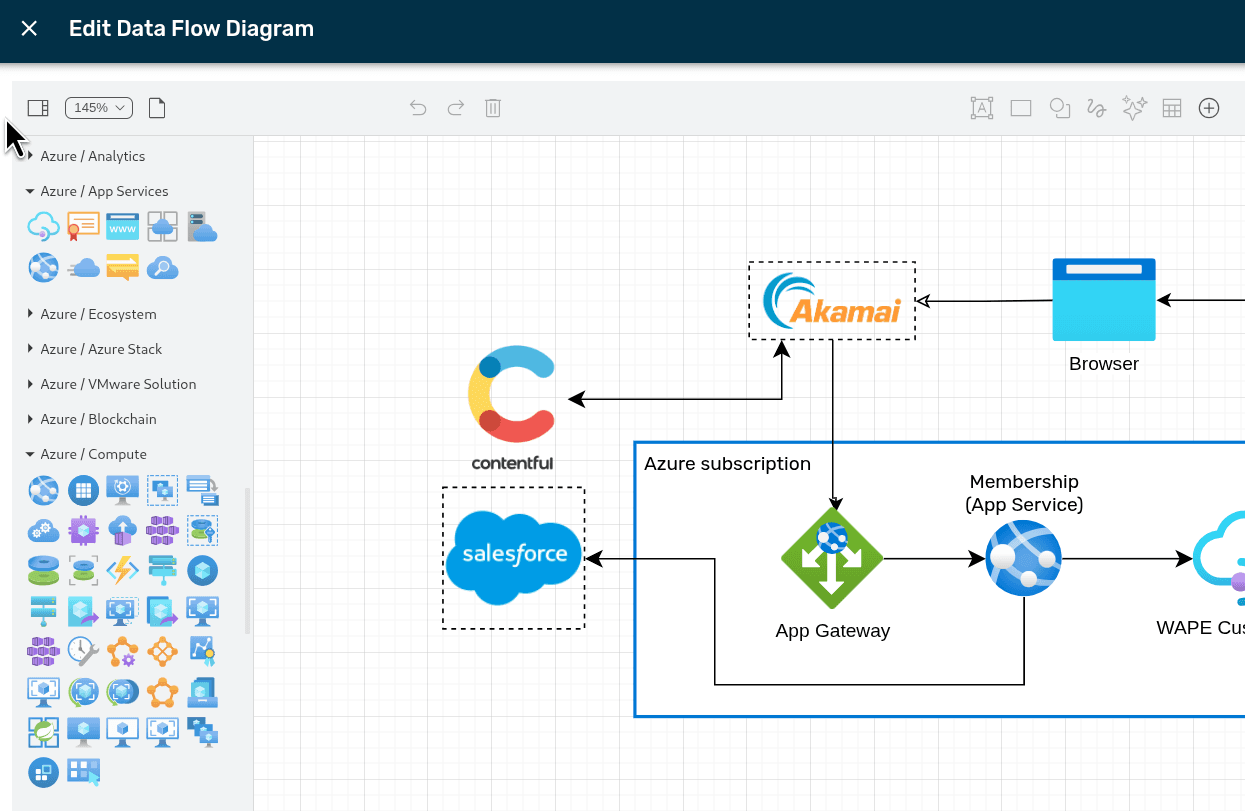
Visual modelling that works with what you already have
Threatplane uses draw.io for diagramming — which means full-featured architecture tools are built in, and any diagrams your teams already have in draw.io or Lucidchart can be imported directly.
Scope any architecture — cloud, on-prem, hybrid, SaaS, AI systems, supply chain, trust boundaries between any of these. If the scope changes, update the diagram and the model updates with it.
What the platform produces
Every model generates a structured set of outputs — all derived from the methodology, not manual entry.
Threat Assessment
A full list of the threats facing the assets in scope, based on rigorous industry methodologies and current threat intelligence.
Controls Assessment
An evaluation of your existing security controls and how effectively they address the identified threats.
Risk Assessment
Threats mapped to business impact and control effectiveness — the basis for prioritising investment and communicating risk upwards.

Remediation Roadmap
A prioritised action plan for implementing controls, tied directly to the threats and risks in the model.
Detective Controls
Monitoring and detection recommendations that follow from the threat model — not a generic checklist, but specific to your architecture and attack surface.
Integrations
The power of tools is in their ability to work together. Threatplane makes collaboration between development, security and risk easy — connecting threat modelling data with the tools your teams already use.
Task management
Automatically add controls tickets to your team's backlog in Jira, Linear, or GitHub Issues. As tickets progress, threat models and risk assessments update automatically.
Data synchronisation
Synchronise threat modelling data with your own tools and documents. Connect with Slack, Google Workspace, Microsoft 365 and more for easy reporting and analysis using your existing business processes.
Export to Git
Keep your threat models with your code. Export to Git and your repository updates automatically whenever your threat model changes.
Organisation-wide security
Enable diverse teams to collaborate on security and compliance goals from a single unified source of truth — not separate spreadsheets and stale documents held by different teams.
MCP server
Connect the integrated MCP server to Copilot, Claude, Gemini or any other compatible model. Ask questions about your threat models, explore risk data, and bring security context directly into your AI workflows — without switching tools.
Bring your own
A comprehensive API lets you work with Threatplane directly to power your own tooling. Webhooks are supported out of the box for custom authentication, SSO, and bespoke integrations.
We are also working to integrate with leading automation platforms to connect thousands more apps.